Is Justice About Truth or Narrative?
Updated: May 7
I like watching informative shows about history, crime, and law—programs that offer insight and teach viewers about real events and legal processes. Through these stories, whether documentaries or dramatizations, I’ve seen countless examples of law enforcement officers who were shot, killed, or lost their lives in the line of duty. Many of these incidents involve violent criminals, drug traffickers, or individuals who have no regard for the law or for human life. Watching these stories often makes me reflect on what is going on in our society today, especially the growing hostility toward law enforcement.
Reflecting on Society's Attitude Toward Law Enforcement
I think about the people who are strongly against border policies or openly despise law enforcement. I remember what happened in Minneapolis in 2020, where protests escalated into riots, a police station was burned down, and the idea of “defunding the police” became a popular slogan. That moment raised a question for me: if a law enforcement officer truly makes a mistake or abuses their power, shouldn’t we demand justice peacefully and hold that specific officer accountable? Why do we generalize and condemn the entire system and everyone who serves within it?
The Imperfections of Law Enforcement
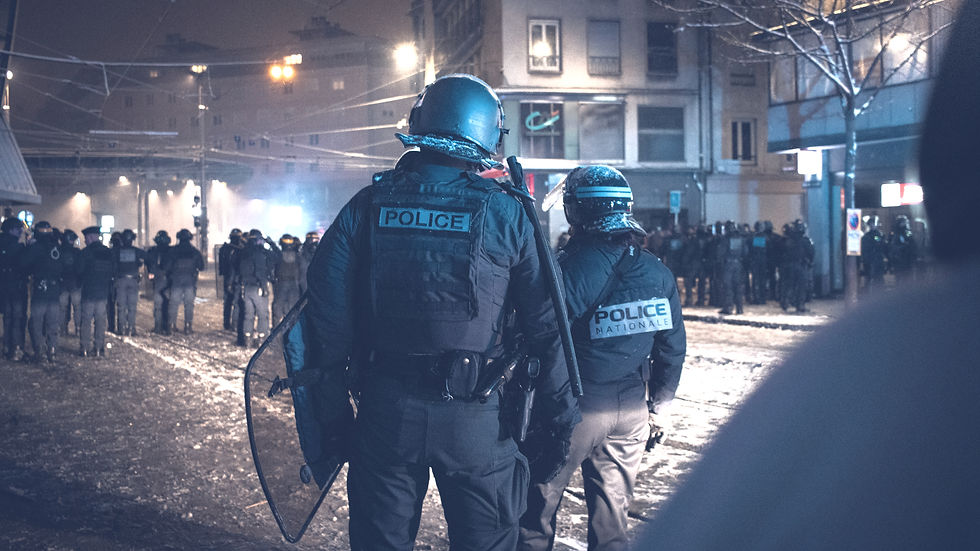
Although law enforcement officers are tasked with enforcing the law and upholding justice, they are not perfect. No profession or system is without flaws, and law enforcement is no exception. Police officers are human, just like the rest of us, and they can make mistakes or misuse their authority. When officers abuse their power or break the law, yes, accountability is necessary, and justice should be pursued but through lawful and peaceful means. Tearing down the entire institution, vilifying all officers, or celebrating violence against them does not feel like justice to me and does not create justice. Instead, it feels like anger being misdirected.
The Imbalance of Public Outrage
What’s more troublesome is how imbalanced or selective the public outrage seems to be. Many protesters are loud and visible when a police officer does something wrong. Even in cases where the death was accidental or occurred during a dangerous arrest, there are protests, marches, and nonstop media coverage. However, when a police officer is killed in the line of duty, there is often silence. No marches. No protests. No viral hashtags. No grief. No calls for justice. Where is the fairness in that? If justice is truly what is being advocated, shouldn’t it apply to everyone? Why does it only matter in one direction?
The Humanity Behind the Badge
Law enforcement officers are not just uniforms or badges. They are people, human beings. They have families waiting for them at home. They have children, spouses, parents, and loved ones who worry every time they leave for work. Just like the victims we hear about in tragic encounters, and victims people rally around—Their lives matter too.
Supporting accountability does not require dehumanizing the people who risk their lives to protect our communities. If we can show sympathy for criminals or others who were killed during police encounters, yet feel nothing when an officer is murdered by those same criminals, that does not feel fair or balanced; it is biased. True justice cannot be selective. It must be consistent, fair, and rooted in respect for all human life. It should apply to everyone.
A Call for Balanced Support
As a society, I believe we should support our law enforcement officers and all those whose responsibility is to keep our communities safe—not obstruct them, demonize them, or assume guilt simply because of a uniform. That does not mean ignoring wrongdoing. If an officer violates their sworn duty or breaks the law, sure, we have the right to demand accountability through proper investigation and the justice system because no one should be above the law. However, tearing down the people meant to protect us simply because one of them made a mistake only puts everyone at risk.
The Path to Real Justice
Supporting law enforcement and demanding accountability are not opposing ideas. They can, and should, exist together. Peaceful dialogue, fair investigations, and equal concern for every life lost are the foundations of real justice. Only then can we move toward safer communities and a more united society.
These are just my thoughts—but I believe real justice means fairness, accountability, and respect for all human life, not just the lives that fit a certain narrative.
I invite you to reflect on these ideas. Can we find a way to support our law enforcement while also holding them accountable? How can we foster a community where every life is valued equally? I believe that by embracing a holistic perspective, we can work toward a future where justice is truly served for everyone. Let's engage in meaningful conversations and strive for a society that values every individual, regardless of their role.
Together, we can create a space for understanding and connection, paving the way for a brighter tomorrow.

Comments